Viewing entries in
personal reflection

Comment

The Participant is Present

Marina Abramovic is exploring some interesting ways to get her audiences to digitally detox. 

  • She worked with Igor Levit, who performed the 86-minute long Goldberg's Variations uninterrupted and by memory, to an audience of prepared listeners. To prepare them, she offered lockers outside the music hall where they were instructed to put all devices and watches. Once in their seats, everyone was given noise cancelling headphones and instructed to sit quietly for 30 solid minutes before the performance began.

  • She ended this TED talk with a short "The Artist is Present" experience where she asked audience members to stare into one another's eyes for two minutes.

  • She's experimented with rice counting as a way to create presence and independence in individuals.

  • And she's envisioning a museum-like institute where people must sign an agreement promising to stay for six device-less hours without leaving. While there, she imagines people going through different chambers where they would (re?)learn how to walk, drink water, sit, stare at each other, and lie down.

Thanks to Note to Self for pointing out this particular rabbit hole.
 

Comment

Big news, everybody.

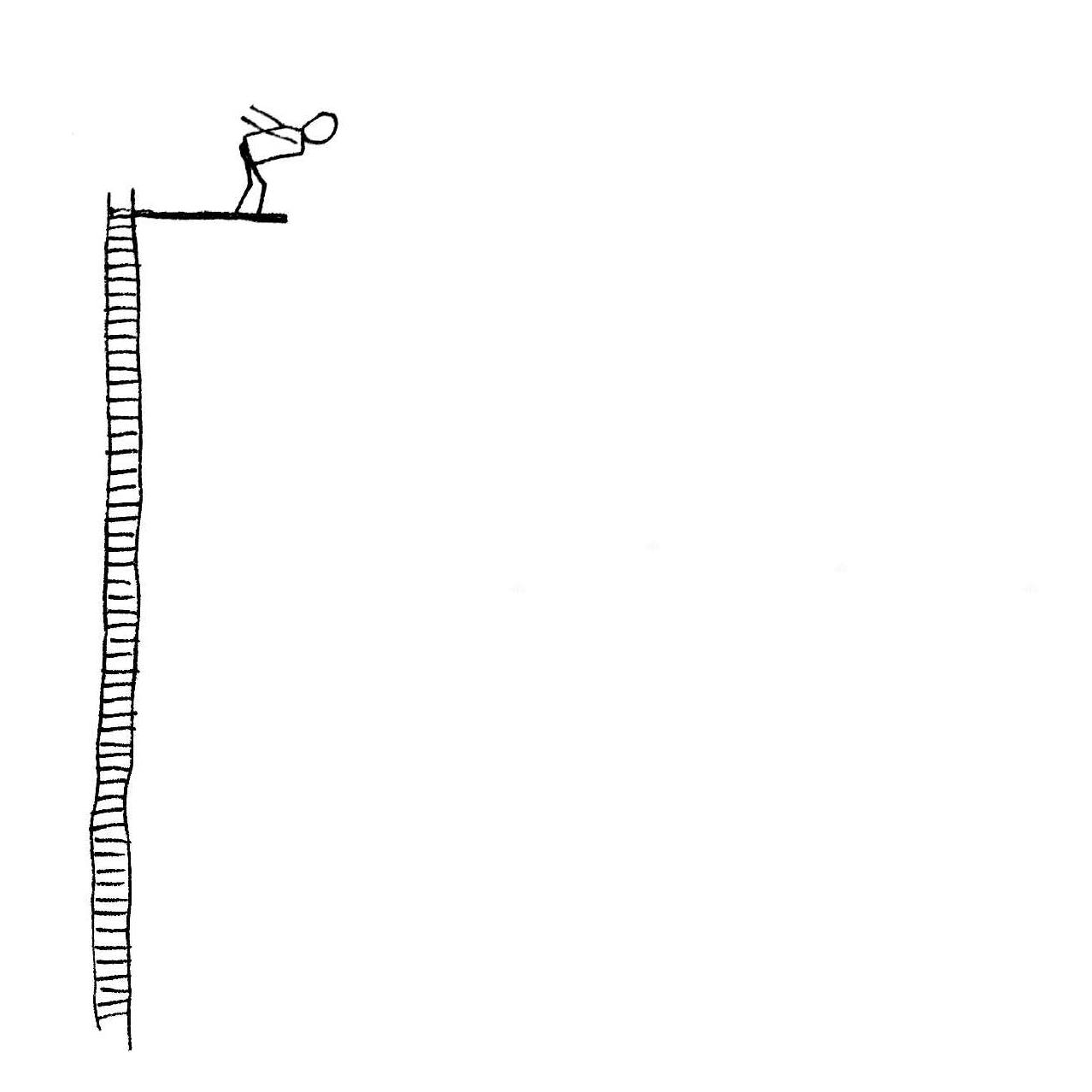
In October of 2014, I posted this image to Facebook and told everyone that I was leaving my job. I said, “I'm leaving because my gut says to leave and that's pretty much the only reason I have.” That was true then, and it’s true today as I write to tell you of another similarly gut-based decision.

Last summer, I experienced an “aha” moment, where I realized that much of what’s come before has positioned me well to do something I didn’t previously know was possible. I met a researcher who studies information and contemplation, and began discussing what it might look like to research that area myself. 

I talked with mentors, faculty, students, former students, and friends. I wrote reams on what I care about, where I’ve come from, and who I am. I began to make out a body of water—a field of research—into which I want to dive deep.

I applied to be a PhD student at the University of Washington, I moved out west, and I crossed my fingers. Last Thursday, I was notified that I’ve been accepted. 

I never expected to be an academic. I never knew studying something like “contemplative practice and information” was even possible. But I feel my whole life has led me to this opportunity and I plan to take outrageous and exquisite advantage of it. 

Classes begin in September. Until then I’ll be working work with some of my favorites, resting my brain a bit, and steadily continuing to build and refine my own set of contemplative practices to carry me through the harder parts of this new endeavor.

Thank you for those good vibes and prayers a few weeks ago, especially those of you who sent them without hesitation or knowledge of why I needed them. They mattered so much, as do each and every one of you.

Some Thoughts on Measuring Online Engagement

Did you grab attention? Did you deliver delight? Did you cause people to want to share? Did you initiate a discussion? Did you cause people to take an action? Did your participation deliver economic value?
— Avinash Kaushik

The tricky thing about these metrics — conversation, amplification, applause, economic value — is that they may or may not reflect what we care about, which is change. It’s assumed that more conversation, more amplification, more applause, and more economic value == good. And that correlation == causation. We can assume neither, despite the digital reams of data that are available to us.

Online facilitation is like in person facilitation, especially if your intended outcome is change. Consider likes, favorites, follows, friends, comments, and shares like you consider test scores, which do not reveal much except for truncated measures of retention, attention, and recall. Clicks of mouse, taps of a finger. These touch points do not reveal the complexity of a human heart, mind, or identity.  Understanding how a person changes based on their interactions with us, how those interactions shape who they are and combine with their past and future experiences to produce change inside of them — healing, harm, openness, closedness — is probably impossible. 

Learning and change are super complex. Consider we may never know the effects of our work. Every snapshot lacks context in some way. Proceed with listening, kindness, observation, and experimentation. Accept that there will be uncertainty, as in all things, and move forward anyway.