Viewing entries in
research

Comment

Introducing Contempla-tech

Mostly, I lament the unintended consequences of technology that make our devices and apps addictive and distracting. I feel vulnerable to their promise of connection, social validation, and self-betterment. While I am wary of the creepy advertising, mysterious algorithms, and indicators that my conversations and search history are being monitored, I still carry my device everywhere and often find myself mindlessly poking at it in hopes of a reward.

I have become especially complain-y and pessimistic about the viability of apps and devices that promise to make us more mindful. I have little hope that their values will survive uncorrupted in a market that requires them to vie for our attention, data, and reward-driven habituation. Yes, it’s complicated. Tech is good and bad and many points in between at the same time. But mostly, for me right now? It's pretty bad.

To balance my perspective, I have challenged myself to discover bits and pieces of technology that enable me to live a life I want to live — specifically, a life with more integrity and presence. By and large, these won’t be features a design team thought up and built, they'll be minor and unintended aspects of our apps and devices that invite, enable, or facilitate contemplative experiences without meaning to. Right now, I'm calling these features "contempla-tech" as in "contemplative technology.” As I discover examples, I'll document and share them here. Here's the first one.

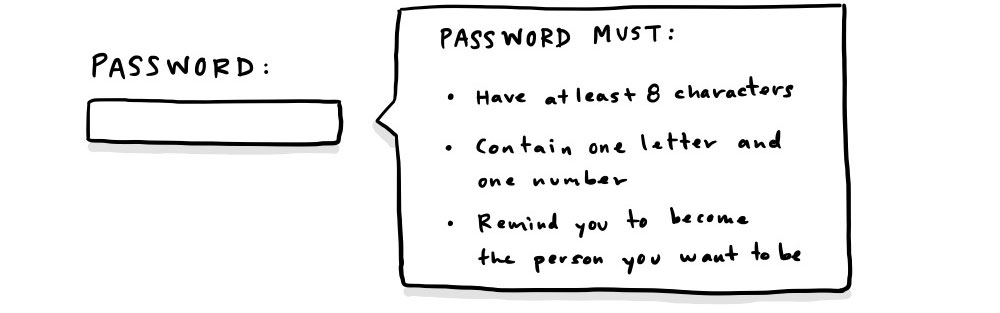
Setting a password with intention

In 2014, I began setting a New Year's intention (as opposed to a resolution) at the recommendation of my friend Frances. I also decided to change my password to that intention so that I'd be reminded of it every day. It's worked beautifully. I've set five intentions in the years since and they’ve been a transformative force in my life. Typing out my yearly intention each day regularly reminds me of it, and I’m not sure how committed to it I’d be otherwise. If I had software that took away my need to type passwords, I would feel impoverished. Those pauses where I must type my password to continue have become an opportunity to remind myself to become the person I want to be.

An Invitation

Has technology surprised you by fostering slowness, presence, mindfulness, or compassion in your life? Was it intended or unintended or maybe a both? Please tell me about it.

Comment

Trains, Bicycles, and Libraries

8 Comments

Trains, Bicycles, and Libraries

I just returned from a three-week trip to Chicago where I was a scholar-in-residence at Skokie Public Library. I took the Empire Builder out and back, a three-day train ride each way. I brought my bike and cycled over 500 miles getting to and from Skokie each day. In addition to getting very tan and very opinionated about Chicago's car culture and bike infrastructure, I experienced an overwhelming sense of rightness and belonging. TL;DR I am filled to the brim. 

This trip was a windfall of riches in experience. Each interaction taught me something. Skokie librarians are downright amazing people. The library itself is full of heart, every ounce of it feels activated.  Together we imagined and practiced what a contemplative culture might look like. We meet, talked, and experimented. I am still feeling out the boundaries of my gratitude. They are far and wide. 

One interaction, in particular, a conversation with a retired Chicago cop who attended a program I ran on a Saturday morning is the inspiration for this post. She taught me many things that morning, and one of them was helping me realize the power of photography to reflect on and appreciate your life. These photos give in many ways. The process of taking them allowed me to slow down and appreciate the moment I captured. The revisiting and deciding which to share allowed me to remember and appreciate the experiences again and also in new ways. Captioning and sharing them with you connects us across time and space. And in the future, I will be glad to revisit these memories and experience all the emotions they rush in. 

THE TRAIN

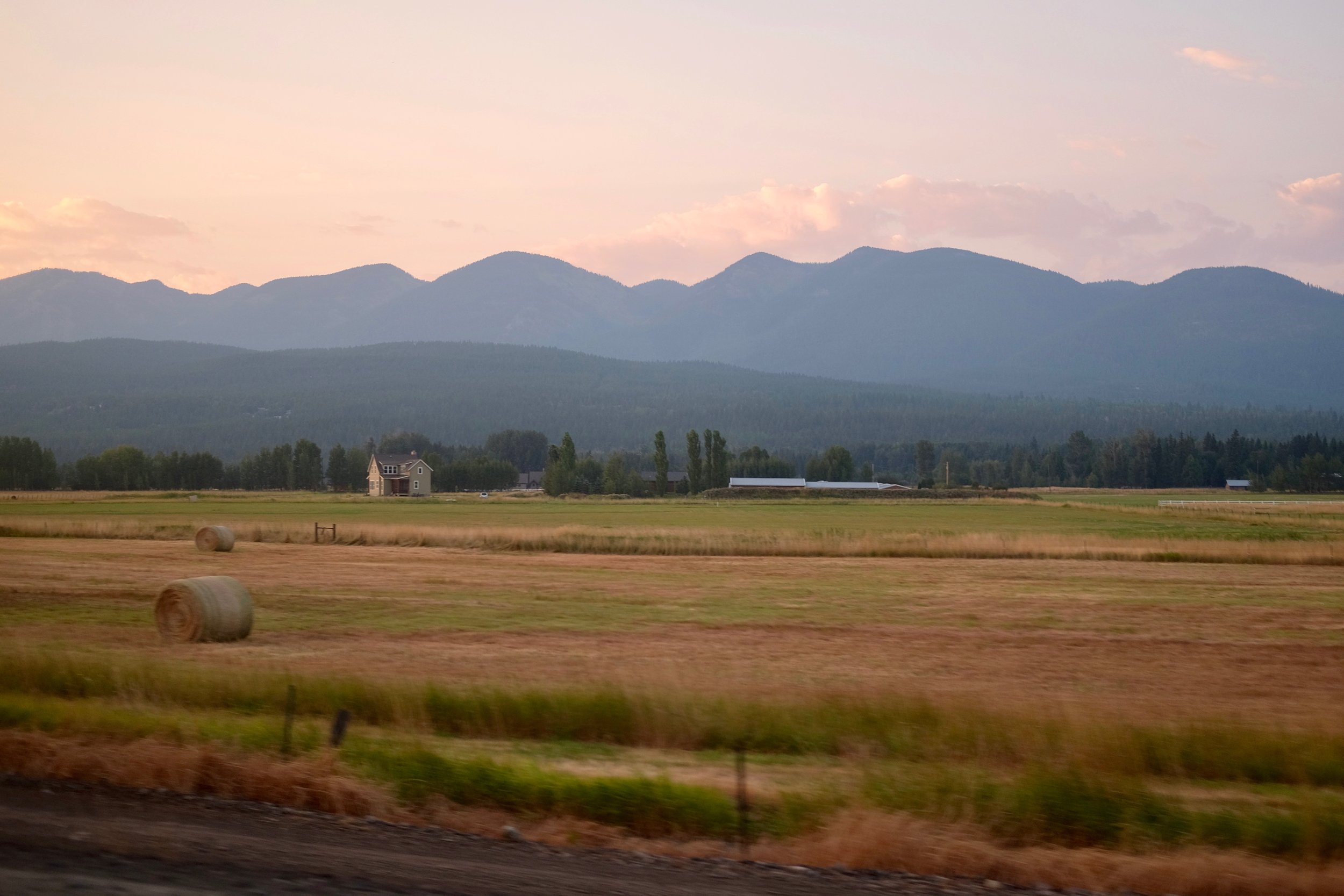
Montana Sky Country

Montana Sky Country

I'd never gone on a multi-day train ride before and I loved it. It's a humane way to travel, one that nurtures a culture of trust. You're trusted as you board. There's no security theater. You trust others to not take your things when they're unattended. You trust each other to care for the common spaces (bathrooms, trash cans, aisles, etc.) while you're traveling together.

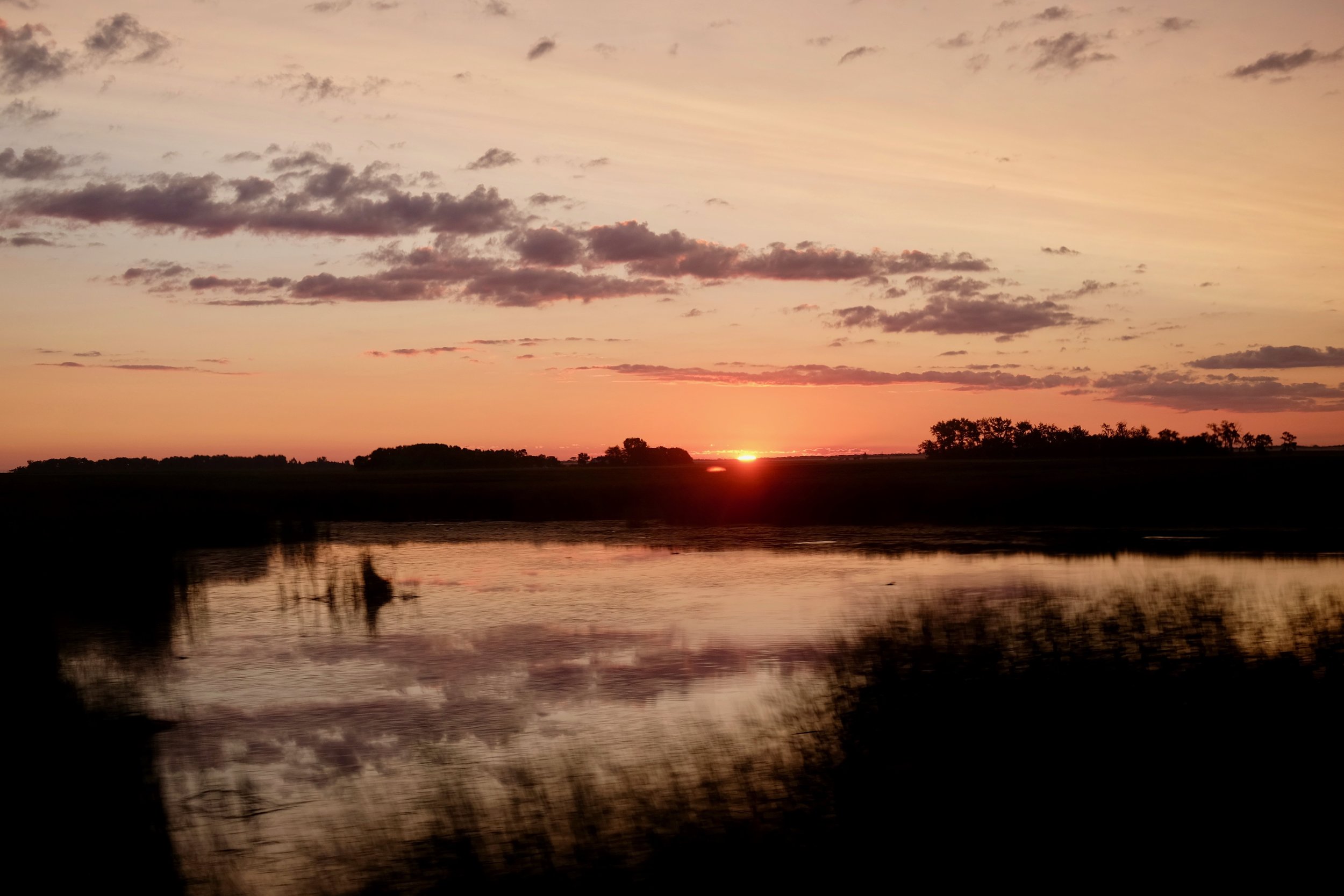
The sun rising near Devil's Lake, North Dakota.

The sun rising near Devil's Lake, North Dakota.

You're trusted to be nice to each other.  During meals, you're seated with whoever came right before or after you. I met such interesting people, all of whom were very different from me. I found common ground with each of them and will remember their faces and our conversations for a long time.

The sun setting in Whitefish, Montana

The sun setting in Whitefish, Montana

It's truly amazing (and also kind of wrong) that we can travel so far so quickly on planes. A train ride gives you a sense of the distance you're traveling. The time zone changes are gentle. You experience the gorgeous and the mundane of trackside towns and forests.

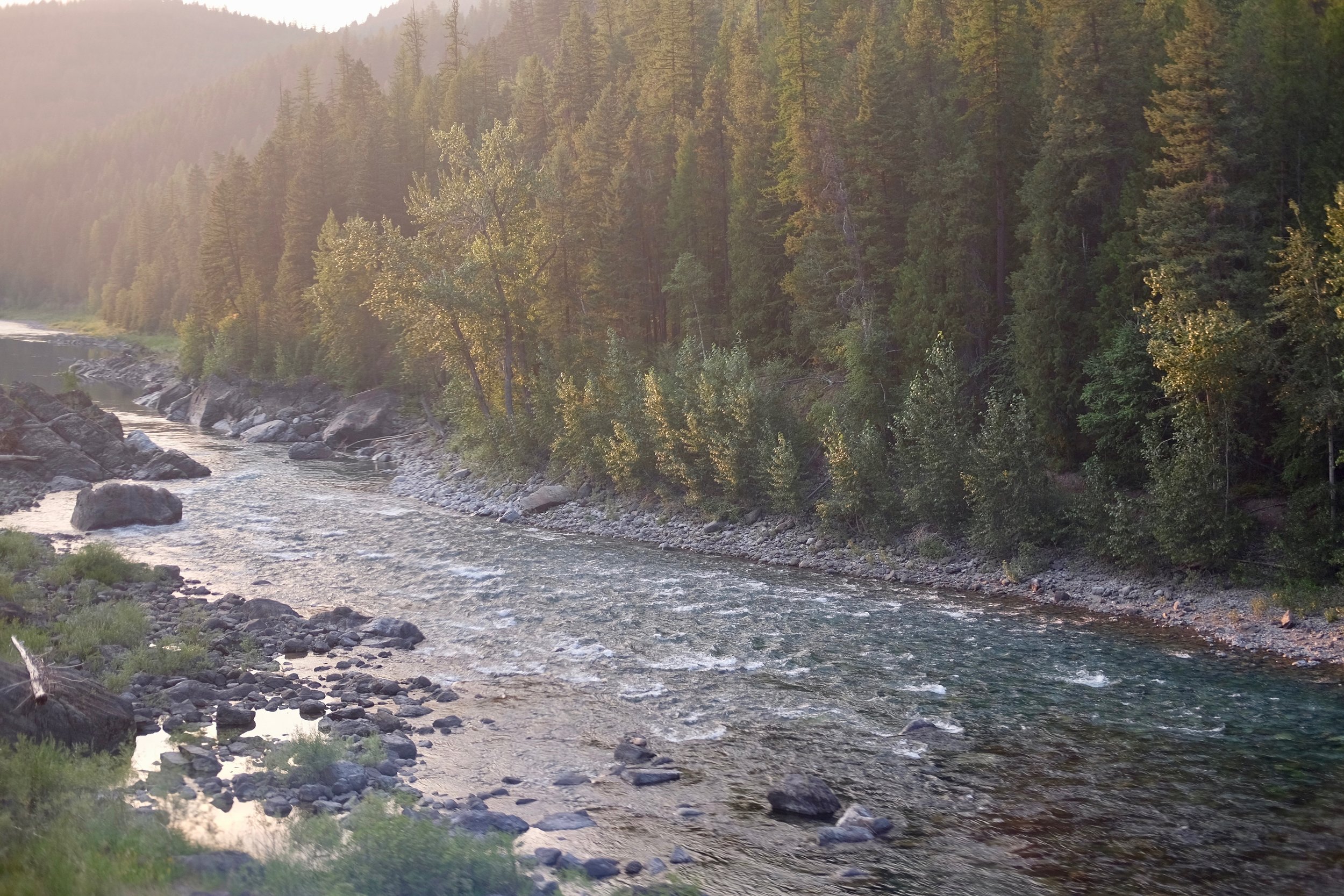
Glacier National Park

Glacier National Park

THE BICYCLE

There is probably nothing more evocative of my time on the trip than this photo.

There is probably nothing more evocative of my time on the trip than this photo.

In exchange for pet sitting a very sweet 19-year-old cat for a week, I had accommodations in Chicago, right downtown in Printer's Row, for my entire residency. This choice afforded me the opportunity to build a true friendship with the colleague that offered her home to me. I also made a couple friends in their tight-knit community. 

Pausing at one of my favorite spots along the lake shore. A bank of flowering Black-eyed Susans.

Pausing at one of my favorite spots along the lake shore. A bank of flowering Black-eyed Susans.

It also meant that I biked 20-miles one-way to and from Skokie each day. It was an interesting choice to make, but looking back on it, my time in the saddle was such a rich and alive part of the experience. I wouldn't have wanted it another way.

A perfect day, especially appreciated after a string of very wet rides.

A perfect day, especially appreciated after a string of very wet rides.

My first ride was during a thunderstorm that began at about 5:30 in the morning. It was torrential and I was soaked through after riding two solid hours in it. After that, I thought it could only get better but turns out another storm awaited the very next day. I experienced so many challenges along the lake front and the streets I found to Skokie (Ardmore, Kenmore, Granville, Lakewood, Pratt, Kedzie, McCormick, and Main). Menacing cars, impatient cyclists, oblivious rollerbladers. It was truly difficult each day in its own way. But, like my commute here at home, which is also two hours and involves 10 miles and a ferry ride, there's so much to be gained by accepting the challenges presented. It is a different experience to ride in the rain when you aren't upset that it's raining. In many ways, my ride afforded countless opportunities to practice acceptance.

THE LIBRARY

From the first minute to the very last of my time in Skokie, I felt something I rarely experience: belonging. Over the course of thirteen days, I participated in 51 engagements — "Mindful Meet-ups" with staff, departmental meetings, walk & talks with individuals, pop-up programming for the public, and more. I directly interacted with lots of folks — from over 70 Skokie staff members to nearly 20 leaders in other area libraries to ~40 members of the public.  It was a very full 13 days.

A goodbye gathering on my last day.

A goodbye gathering on my last day.

I left with more questions than I arrived with, which is just what a PhD student needs. Together we explored contemplative culture, programming, and spaces. There's so much to play with and learn about what's possible.

Drawing "internal weather reports" with Skokie patrons. (Photo by Max Herman)

Drawing "internal weather reports" with Skokie patrons. (Photo by Max Herman)

I think more than any other question, though, the one that's most on my heart and mind at the moment is about how contemplative practice creates and sustains community.  I am sure that wherever my work is leading, it will involve understanding how we bring our whole selves to everything we do, and how our whole selves are incomplete without understanding who were are together.  

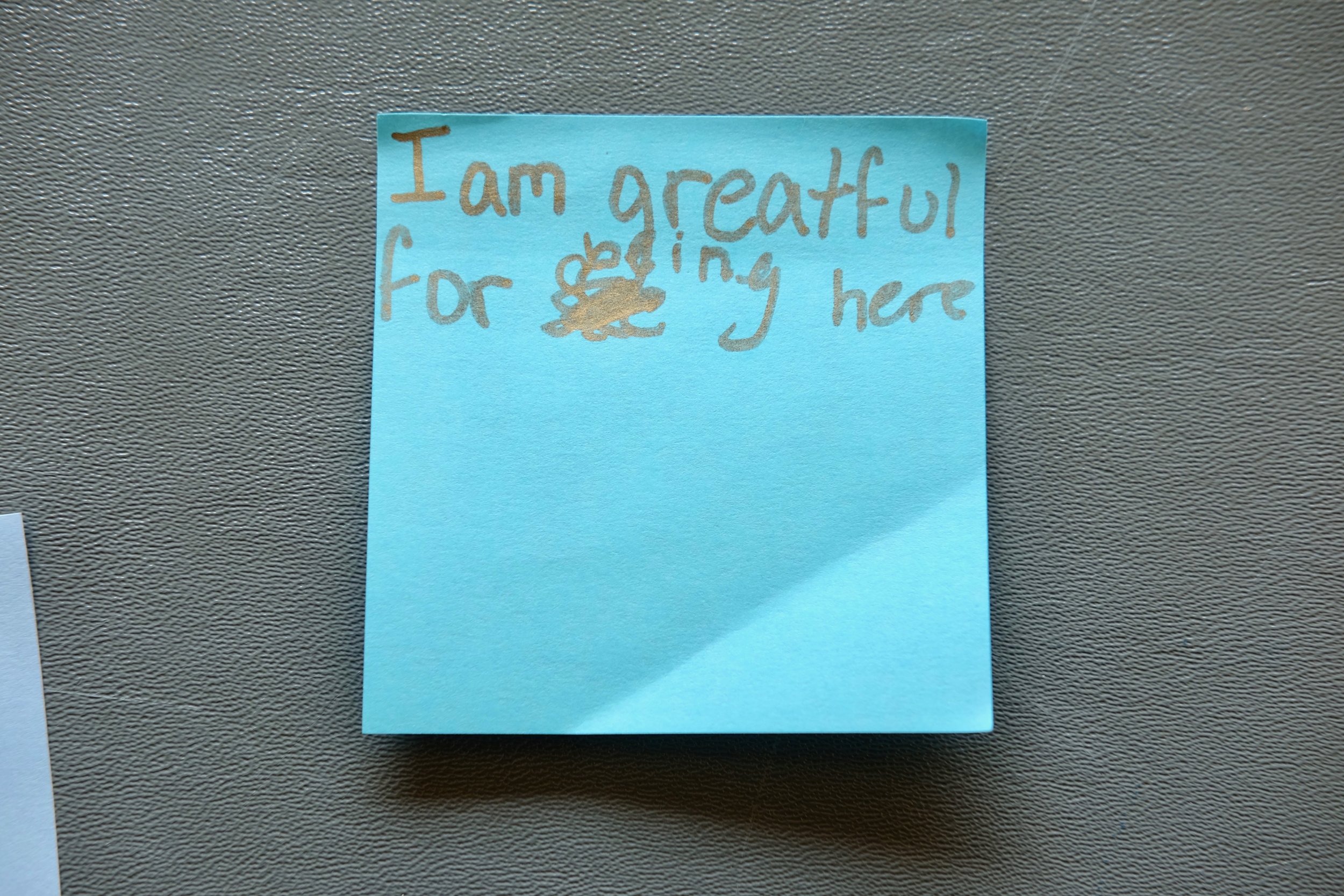
A post-it note left by a member of the public. I couldn't have said it better myself.

A post-it note left by a member of the public. I couldn't have said it better myself.

So much gratitude for this experience. So much more to come.

8 Comments

Get Freer with Freewriting

This quarter I've been exploring freewriting*. I've discovered Peter Elbow and Marion Milner and Pat Belanoff. I've introduced a freewriting activity into the undergraduate design thinking course I TA-ed for, I began a research project with Morning Pages writers, and I'm noodling on an idea for a collaborative freewriting tool that would help groups through stuck or stymied moments in their creative process. I've also played with my own freewriting, experimenting with new methods and tools.

FOR EXAMPLE, I'VE BEGUN TO FREEWRITE IN THE MIDDLE OF MY COMPOSITIONS BY PUTTING ON THE CAPS LOCK AND WRITING WHATEVER'S ON MY MIND FOR A LITTLE WHILE BEFORE GOING BACK TO 'REGULAR' WRITING MODE.

This morning, while reading Belanoff's Nothing Begins With N**, I stumbled on her list (p. 27-29) of ways to make your writing more "free," which in turn may make it more original, clarifying, cathartic, and (ironically) structured. Here are a few of her exercises (paraphrased by me) that I thought were especially easy to try:

  1. Write for longer and longer periods of time and more quickly. For example, set a timer, write, and then the next time you freewrite, set the timer for the same amount of time, but write more than you did the time before. Or set a word count and time how long it takes you and try to beat it the next time. As you go along with this practice, increase the timer or word count from time to time (ha!).

  2. Get everything out of your head and onto paper (or the screen) in 3 minutes. List making is fine for this activity.

  3. Freewrite about the process of freewriting instead of freewriting about whatever you're working on or through.

  4. Freewrite only questions. Ask every question you can think of.

  5. Freewrite for five minutes, then put that writing aside and rewrite what you just freewrote. Wait five minutes. Try to rewrite your freewriting once or twice more. Afterwards, look at the writings and compare them. Did your ideas evolve? What was consistent? What was lost?

More to come from me on freewriting and especially that Morning Pages study. Still figuring out what and how to blog my academic journey and this morning's reading struck me as simple and straightforward to share. If you have thoughts about freewriting, please tweet or email them to me.


* Here's a typical prompt for freewriting from Elbow: The idea is simply to write for ten minutes (later on, perhaps fifteen or twenty). Don't stop for anything. Go quickly without rushing. Never stop to look back, to cross something out, to wonder how to spell something, to wonder what word or thought to use, or to think about what you are doing. If you can't think of a word or a spelling, just use a squiggle or else write "I can't think what to say, I can't think what to say" as many times as you want; or repeat the last word you wrote over and over again; or anything else. The only requirement is that you never stop.

** I love the story of how this book was titled: A student who was being encouraged to freewrite said "I have nothing to say," to which the instructor replied, "Nothing begins with an N."