Now is a time for courage.

Now is a time for courage.

To people like me, average and privileged: Now is a time for courage. May this moment be like the hill I bike to get home — unforgiving and hard, but strength building and on the way to a better place. Give yourself time and space to digest this loss. Speak your truth to those you trust. Write, pray, cook, cry, smile at strangers, give and take hugs, be you. There is a role for you to play in whatever comes from this. Your job right now is to figure out what that is and have the courage to be it.

To those who may feel more threatened and marginalized than ever: Now is a time for courage. May this be the villain at the end of the story who is on his last breath. May you have the  strength to keep fighting and may you trust those of us who are ready to fight for you. Your wounds were centuries in the making and they will be centuries in the healing. I truly believe our lives are playing out on the healing part of that path. Raise your voices. We are listening and many of us are ready to do our part. You are not alone.

To people who supported Trump: Now is a time for courage. May you feel heard. May you rest in whatever relief this outcome gives and may you pay close attention to the unrest that exists within you as well.  May you have the courage to participate in righting whatever wrongs unfold from this. 

I’m pretty sure that everyone in America is feeling the same thing right now and that’s fear. We may be afraid for different reasons, but we are afraid all the same. May we be united instead by our courage. If there’s anything to truly fear it is that we won’t open our eyes and hearts in this moment. Fear is moving closer to truth. Fear is a prerequisite for courage. Now is a time for courage.

2 Comments

Question: What is contemplation?

In an effort to share what's on my mind and also invite dialogue and collaboration* with others, I've decided to occasionally post illustrated questions to my Twitter account. 

I posted the first question "What is contemplation?" on July 20th with the following illustration:

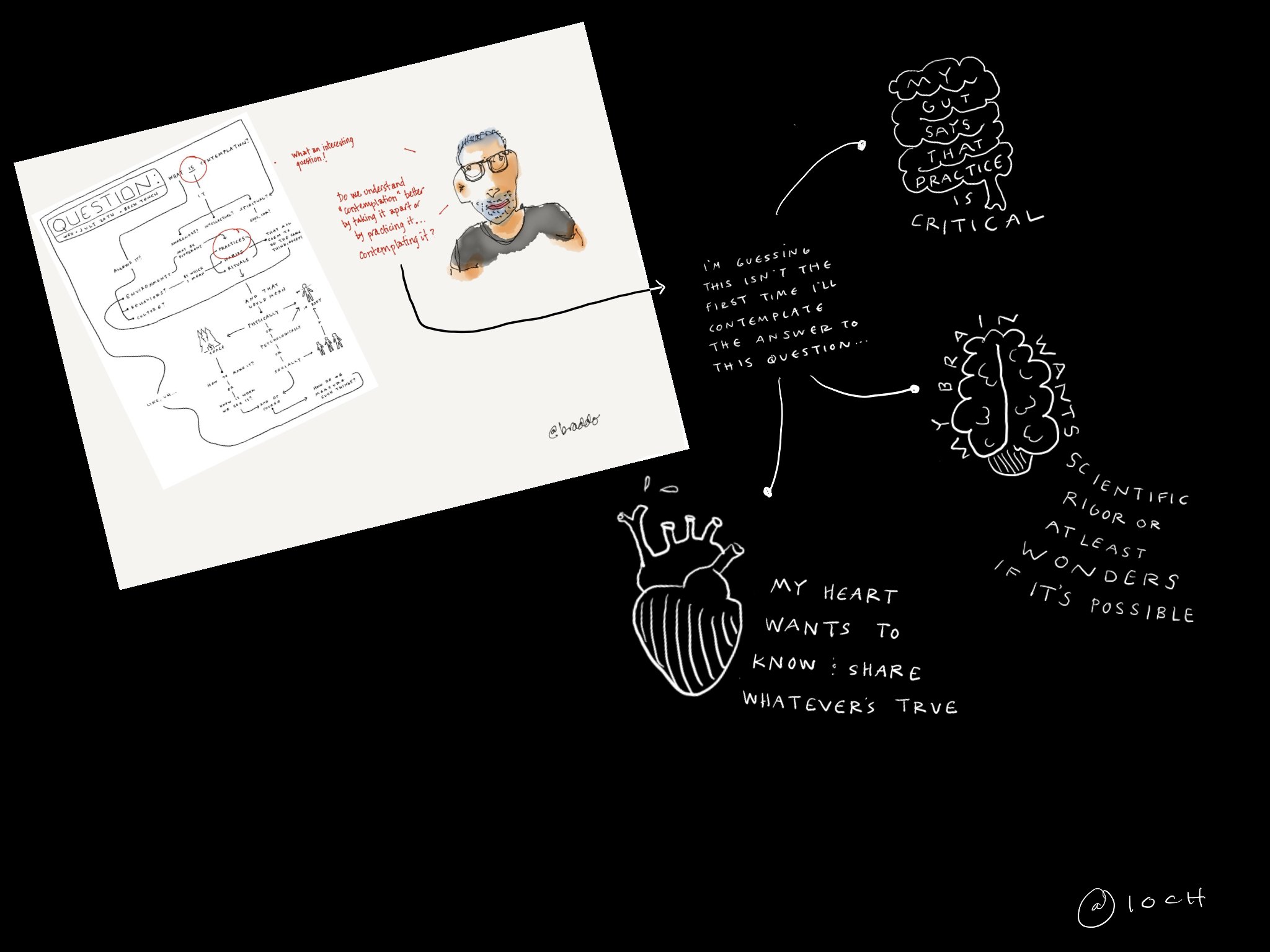
To my delight, a new friend that I met at Sketching in Practice, Brad Ovenell-Carter, took some time to enter in dialogue with me by responding with this:

Brad asked, "Do we understand 'contemplation' better by taking it apart or by practicing it?" I suspect this is something that the people who already research mindfulness and contemplative practice grapple with all the time. I haven't even started yet and I am already torn between wanting to be rigorous and scientific and wanting to truly understand, which I recognize may end up being a personal journey. I hope both are possible. I tweeted back:

To which @braddo replied

Encouraging me to read "Meditation in a Toolshed" by C.S. Lewis, which I did and found inspiring. On his recommendation, I'd also read a post on Brainpickings about Alfred Kazin, whose journals I instantly downloaded to my iPad thanks to the wonders of having a university NetID. I tweeted back:

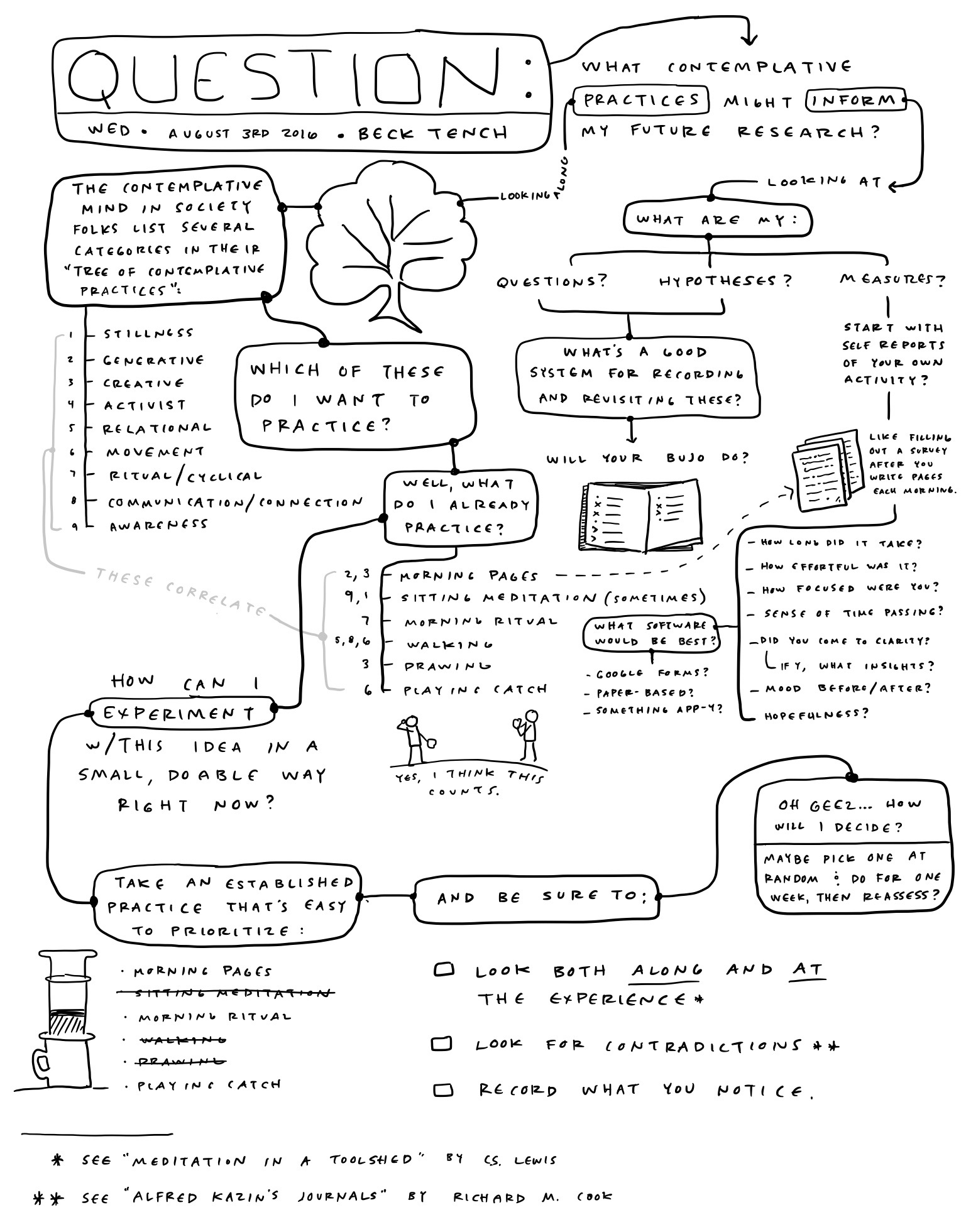
And found myself arriving at my next question, which I posted this morning: "What contemplative practices might inform my future research?" The twitter conversation for today's question is already unfolding to reveal new connections and ideas.

I'll be sure to chime back in with any insights I come to regarding experimenting with looking along and at my own practices and where they lead me. Feel free to pick up any of these threads and contribute your thoughts. You don't have to be as provocative or talented at drawing to be part of this discourse. 

And much gratitude to @braddo for extending my thinking here. There are fewer greater gifts. 


* I'm enabling comments on this post if you'd like to think together about this publicly. Of course, you can also email me or dm me on Twitter if you'd prefer to keep the conversation private.

2 Comments

A Guide to the Personal Retreat

Recently, I led a staff retreat day for Literary Arts, a wonderful organization in Portland, OR. In preparation for the day, I created handouts for each of the activities I'd planned to do.

I snapped a photo during the Morning Pages workshop and posted it to Instagram. On a phone call later, my friend and colleague Sarah Lutman said she wished she could've been there. I mentioned that I had handouts from the day that I could send her and she was eager to receive them as she was already planning a personal retreat day and might use some of them as inspiration. In that moment the idea of converting those handouts into something any individual might use for his or her personal retreat was born.

I've since edited the handouts so that they apply to individuals and also added some instruction around planning for and filling a day of personal reflection. It is with gratitude to Literary Arts, Sarah Lutman, and each of the idea creators represented within (most especially the ones I know personally: Anton ZuikerDave Gray, and Nick Sousanis) that I present to you the first version of A Guide to the Personal Retreat. I hope and intend to update it with added suggestions and activities in the years to come.


A Guide to the Personal Retreat

This 12-page PDF guide contains advice and instruction for creating your own personal retreat. It will help you plan and structure a seven-hour day and fill it with reflective activities that I've vetted through my own personal retreat experiences.

Here's a list of the activities included in the guide, each linked directly to their original creators:


As requested in the guide, please send your questions or any stories (and images!) about your retreat to beck@becktench.com