Viewing entries in
research

4 Comments

Great Lengths: A Blog Series About Setting Boundaries with Social Media

There’s an entire industry built around harvesting our attention for corporate financial gain. It’s called the attention economy. The more attention we pay to a website, game, video, or app, the more advertising and data-tracking those media can do. To keep us coming back, tech companies deploy a method called behavior design (it’s also been called persuasive technology and captology). Using lessons learned from early psychological investigations, such as BF Skinner’s pigeons pressing levers for food, modern day psychologists have created a formula to get humans to press buttons for likes. This formula uses pain and pleasure, our hopes and fears, and the promise of social acceptance and threat of rejection to motivate our behavior. 

Lecture 4 — Tue Oct 8 2019-2.jpg

Increasingly, designers and programmers are building addictive technology that causes and/or regulates the release of dopamine in our brains. Some apps and websites actually “dose” dopamine by withholding information, like how many likes a photo has on Instagram, so it can burst that information later and all at once, effectively dosing a larger “hit” of dopamine and making it more likely that we’ll to return sooner for another. 

This is one reason why it is a common experience to lose time while on Facebook or Instagram or Youtube. The consequences of this lost time aren’t confined to what we might have done instead—our attention is impacted as well. This is because attention is fatiguable, and when we spend it scrolling endless streams and auto-playing content, we have less energy to attend to things that may matter more.

I believe we can have greater agency over how and when we attend to technology. As a PhD student, this belief motivates much of my research. Over the course of the next month, I intend to write a series of blog posts that describe the strategies I use to set boundaries in my use of technology.  With these posts, I hope to generate and lively and convivial dialogue about mitigating (or at least minimizing) the harms of the attention economy while allowing for (or even maximizing) the positive effects technology can have in our lives. Stay tuned.

4 Comments

2 Comments

Mapping Areas of Possibility

This post is inspired by the ongoing thought experiment: What if task management software was designed to help us be our truest selves instead of helping us be as productive as possible? I’ve previously shared two strategies: “Be a Good…” lists and crafting tasks as messages of kindness from past to present self. Today, I would like to share a method for reorganizing projects and tasks to better align with the life we want to live.

Please note: This method applies to any software that invites the user to organize her tasks into projects and folders. I’m using OmniFocus for this, but the process would work in many popular apps. As for handwritten lists, it may be a little less appropriate, but it would work if you are creating collections in the Bullet Journal style.

Areas of Responsibility

A popular method for figuring out task management structure is to map areas of responsibility. In the Getting Things Done methodology, David Allen suggests that you create “a complete inventory of everything you hold important and are committed to.” He goes on to suggest moving down each area and creating “reminders of key areas of responsibility, your staff, your values, and so on.” The lists below are examples from his book about what a complete inventory and drilling down into a key area might look like:


key areas

Career goals:

  • Team morale

  • Processes

  • Timelines

  • Staff issues

  • Workload

  • Communication

Complete Inventory

  • Career goals

  • Service

  • Family

  • Relationships

  • Community

  • Health and energy

  • Financial resources

  • Creative expression


These lists can inform how tasks and projects are organized. Given the above example, it is natural to create project folders and contexts that align with those areas. If I follow this advice and create a map of my own areas of responsibility, it looks like this:

responsibility.gif

Using these areas, I might create a project for my design methods class this summer under teaching, and put the map of restorative space I’m designing under research. My role as an Of/By/For All board member might go under global service. An acupuncture visit could go under health. This framing accommodates pretty much anything I can think to do and much of the software that I’ve explored fits well within it.

Areas of Possibility

Consider, however, what happens when we decide to map areas of possibility instead. Instead of creating an inventory of all the areas of my life, I create areas of possibility by asking myself what life I want to live into. I move from an “inventory” mindset to an inherently creative activity. I must imagine what my life could become. Heres what I get when I map areas of possibility:

possibility.gif

These areas reflect a combination of factors that are significant to me right now. Some are heavy on my heart and mind (like good health and spirituality), others are exciting and energizing (like creating a life of writing and teaching), and others are more oriented toward the contemplative (like appreciating the miracle of being in alive still and in the first place). To create this list, I imagined my future self, looked at the quality of her life, and described it with these sentences. It is important to note, however, that those imaginings were informed by a steady observation of my life as it is today and what it reveals about who I am becoming. In other words, mapping areas of possibility is observational, not aspirational.

In Let Your Life Speak, Parker Palmer writes, “Before I can tell my life what I want to do with it, I must listen to my life telling me who I am.” The areas I’ve mapped above were created in that spirit. For example, the area labeled “my everyday working life feels like the general exam” was inspired by reflecting on how right it felt to write eight hours a day everyday for two weeks during my general exam—how wholly satisfied I felt at the end of each day, even the hard ones, and how easy it was to re-engage each morning. Noticing that about myself revealed a possibility to live into a life that may be particularly right for me. The area labeled “I appreciate how precious human life really is” was in response to the contemplative practices I’ve held for years and the chief lesson they’ve taught me, which is, in Mary Oliver’s words, “doesn’t everything die at last, and too soon?” It is inspired by small moments, like when I look across the room at my wife as she does yoga and appreciate that her life is limited and one day I will not be able to do something so casual and fleeting and wish that I could.

In mapping responsibilities, Allen drills down into each area to explore its key features. Doing this in a map of possibilities might look like:


I appreciate how precious human life really is:

  • I stay present to life as it unfolds.

  • I appreciate those around me, realizing I will lose them.

My everyday working life feels like the general exam:

  • I cook all my meals.

  • I take daily walks or ride on my bike for fun.

  • I write for hours each day.

  • I exercise my mind and thoughts to their limit.

  • I approach answers to big, complex questions.


Considering the two lists above, writing this blog post might fit under a project folder called “The Writing Life,” which would support me in “writing for hours each day.” Preparing for a visit from a friend might fit under a project called “Life is Precious,” which would support me in “appreciating those around me, realizing I will lose them.”

Translating Map Into Structure

For a long time, I organized my tasks into a folder structure that reflected areas of responsibility (left), but now I’m organizing based on areas of possibility (right). The magic of this organizational tweak is that now certain projects feel like they don’t belong and I have to reckon with that, including reconsidering them altogether.


Areas of Responsibility:

Screen Shot 2019-05-21 at 9.40.05 AM.png
 

Areas of Possibility:

Screen Shot 2019-05-21 at 9.39.56 AM.png


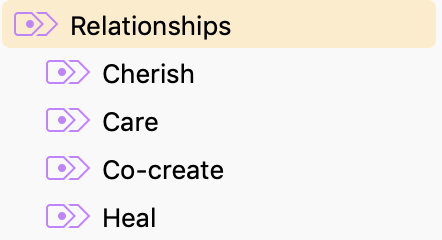
My areas of possibility have become folders in OmniFocus: “I am in good health,” and “I feel at peace with my spirit” have turned into a folder “Healing Happens”; “My everyday working life feels like the general exam,” has turned into “The Writing Life”; “I am in relationship with others as a teacher” has turned into “The Courage to Teach” (a nod to Parker Palmer’s sage advice about teaching); and “I appreciate how precious human life really is,” has led to two folders, “Life is Precious” (present-oriented) and “For and With” (care-oriented). It has also changed the way I organize my tags. For example, my “Agendas” tag used to be full of people organized by area of responsibility. Now I am reminded of how I want to engage with people. For example, Marilyn is now under “Cherish” and Chickens are now under “Care.”


Areas of Responsibility:

Screen Shot 2019-05-17 at 4.41.35 PM.png
 

Areas of Possibility:

Screen Shot 2019-05-17 at 4.45.03 PM.png


Organizing my folders this way helps OmniFocus serve as an ally in me becoming my truest self. While I’d never put a task, “Look at Marilyn” under a project “Appreciate my Wife” in my folder “Life is Precious” and check it off when it’s done, the structure of my projects now serves as a reminder that the work I do each day, ticking off this box or that box, is my life. By being thoughtful about how I use this technology, I can make the life I want to live available to me right now by changing the content of those boxes.

2 Comments

Kinder To Do Lists

11 Comments

Kinder To Do Lists

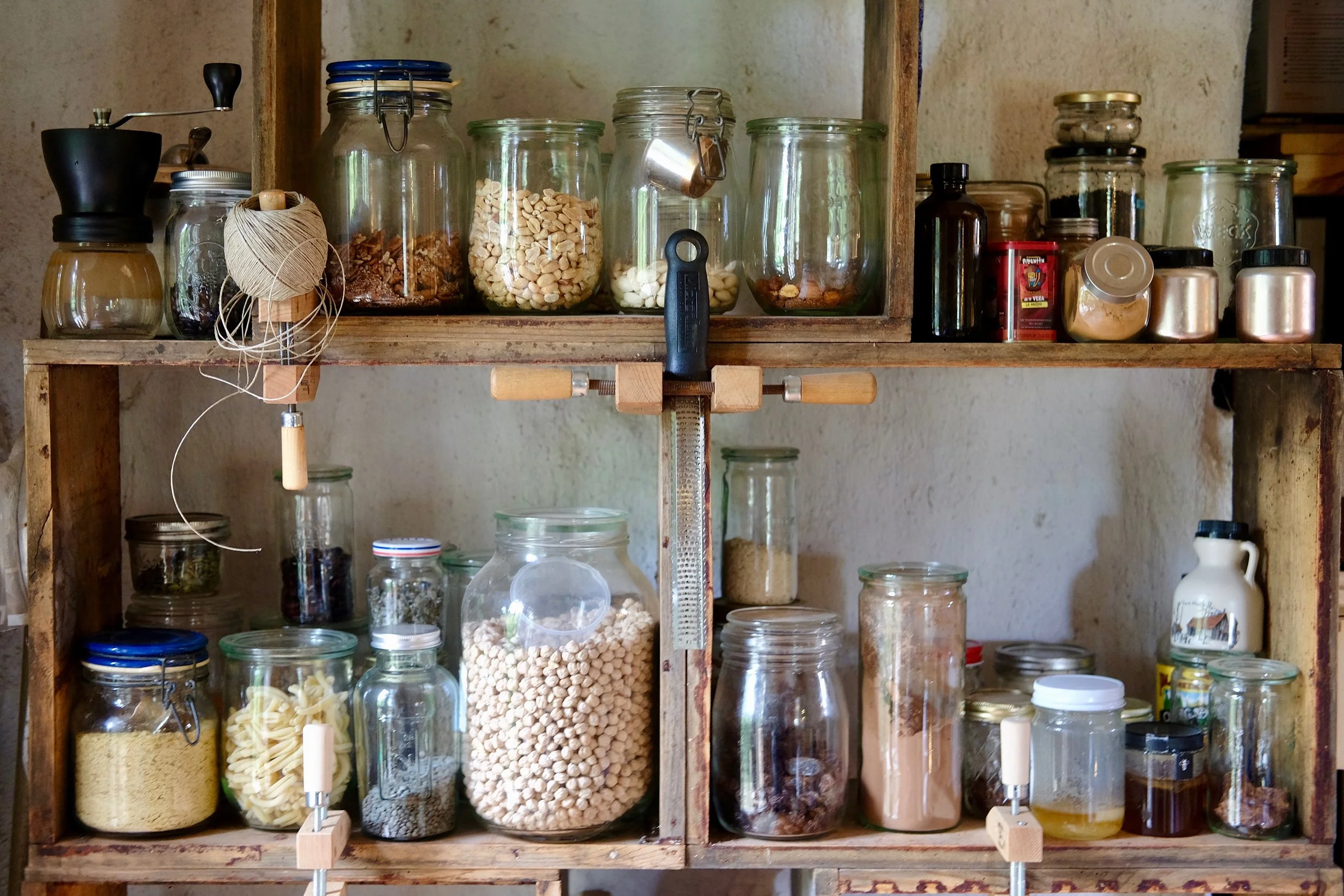
As a person who loves to cook, I look at my pantry as a place of possibility. I see beans and cornmeal, cocoa powder and almonds, pasta and capers and I want to create—to cook. I was thinking recently, what if my pantry were like my to do list? Instead of being a place of potential, it would be a list of things I need to do, many combined with others in ways that don’t make sense.

 
Screen Shot 2019-05-13 at 9.50.34 AM.png
 

I began to wonder… how might I organize my to do list so that it makes me feel the way I do when I look at my pantry? How might it become a place that gives me a sense possibility, where I want to create—to work. I’ve been playing with this idea for a couple months and have come to some preliminary conclusions.

(1) LANGUAGE MATTERS

For those of us that use digital tools to manage our to do lists, it is especially important to consider how we use language in creating to do items. When items start with verbs (e.g. Use, Soak, Cook, Combine, Check, Cook, Eat), they become commands. This results in computers commanding us to do things. They control our time and our agency in subtle (and sometimes overt) ways.

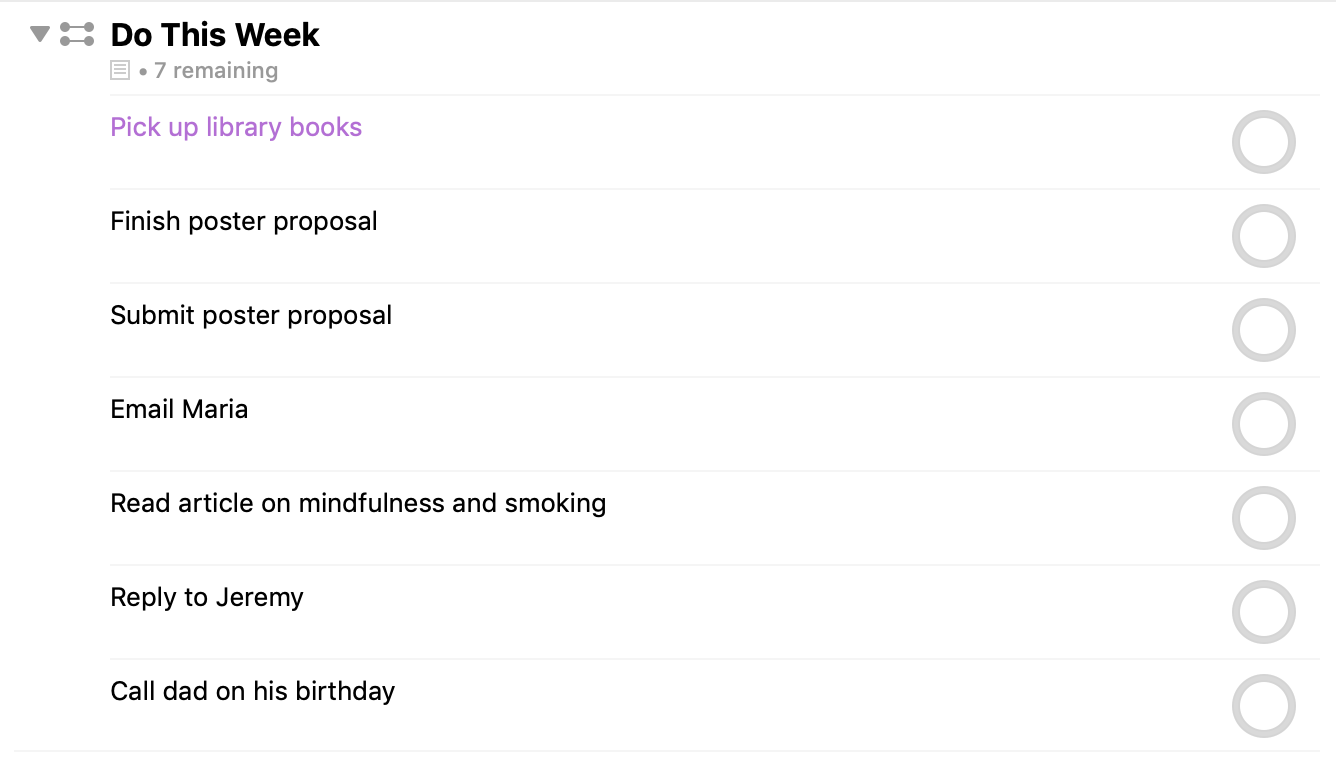
I’ve begun to use new language when I enter items into my to do list (in my case this is OmniFocus, but these suggestions would work with most software, I imagine, and also with handwritten lists). In the example below, I’ve shifted the language of each item in a sample list:

Screen Shot 2019-05-13 at 10.11.25 AM.png
Screen Shot 2019-05-13 at 10.21.17 AM.png

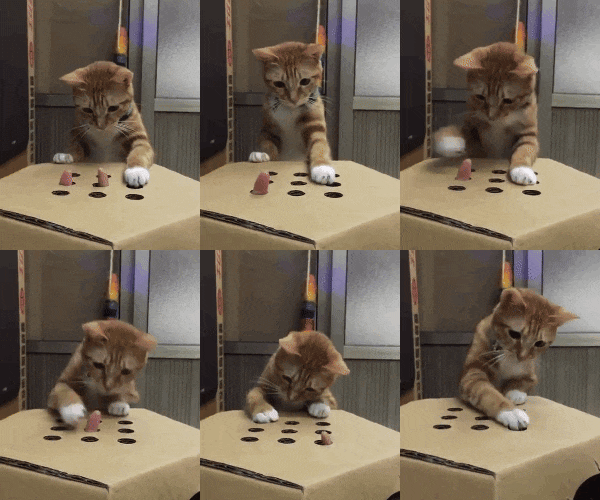
When checking off an item that begins with “You promised to email Maria…” I feel as though I’m being a person who follows up on her promises. When checking off “Email Maria,” I feel as though I’ve just won another round of whack-a-mole. It used to be the case that I often felt disappointed in myself at the end of the day, despite the work I’d done. Now I actually feel better and I wonder if it is the new language I’m using. Checking off items now adds up to something more than winning whack-a-mole. It has become evidence that I am fulfilling promises, following up on good ideas, remembering my intentions—much more rewarding to me than “being productive.”

(2) FUTURE-Self compassion

Right now I am mostly treating OmniFocus as an external memory for my intentions. I try to craft my to do items so they remind me of who I wanted to be. I also try to give my future self agency to decide to do something different. A lot of my items begin with “You wanted…” or “You thought…” or “Consider…” so that I can decide what to do when I want to do something. Let’s take a real list as an example. In my old way of creating a list of things to read, each item would contain the name of the article and I’d check it off once I’d read it. Now, my reading list looks like this:

 
Screen Shot 2019-05-13 at 10.53.56 AM.png
 

(3) A practice of kindness

While it’s much quicker to rattle off commands in a to do list, I’ve experienced a couple of interesting benefits crafting them this way. First, it gives me a chance to practice kindness every time I need to add an item to my to do list. Like centering on the breath to self-regulate attention, having something “to do” centers me on self-compassion over and over again. In turn, I become the recipient of kindness (from my past self to my present self) every time I look at my to do list. This provides a chance to experience gratitude and gives the gift of choosing what to do with my time.


I’m not at the point where opening OmniFocus brings as much excitement and possibility as looking at my pantry… perhaps I love cooking more than working and so it never will. However, I open the app with curiosity about what it is I thought I might like to do, which is such a different experience from feeling overwhelmed by all the things that need to be done.

11 Comments